


Buying a condominium is not simply the purchase of an apartment. It is the purchase of a private home within a shared legal, financial and operational system. The quality of that system will shape the buyer’s monthly costs, daily experience and long-term property value.
A well-designed unit can still become a frustrating investment if the common property is poorly maintained, the budget is unrealistic or the rules are unclear.
Before committing, a buyer should examine the community with the same care used to inspect the residence itself.
Understand What You Own
A strata title gives the purchaser ownership of an individual strata lot together with an inseparable interest in the common property. The common property may include entrances, roofs, corridors, external walls, stairs, lifts, gardens, pools, plant rooms, parking areas and other shared infrastructure, depending on the registered strata plan.
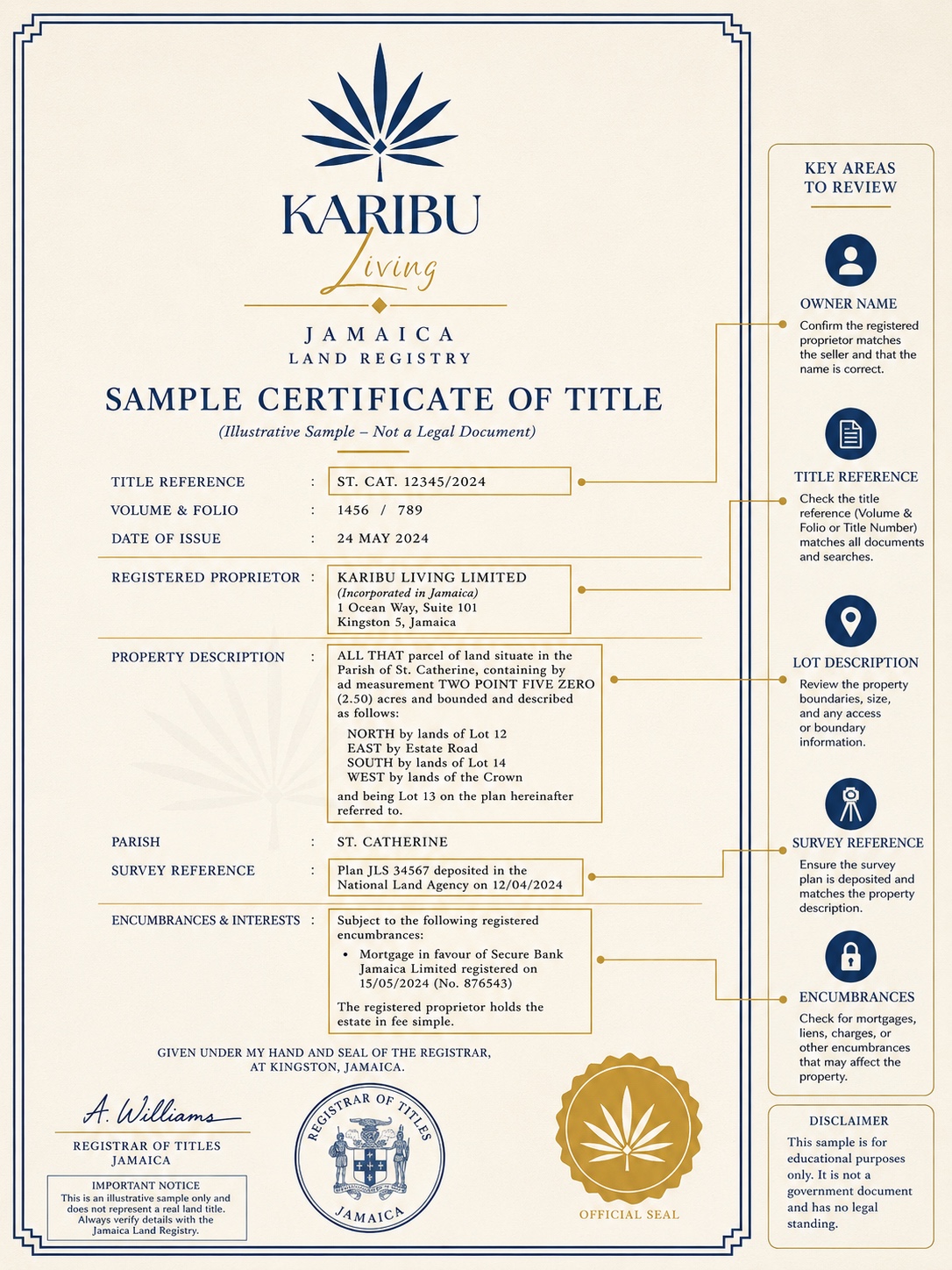
An essential buyer document
The registered strata plan is therefore an essential buyer document. It identifies the lots, common property and unit entitlements.
The National Land Agency’s eLandjamaica service can be used to search for strata plans and land records, while the Commission of Strata Corporations can provide information on a corporation’s registration and compliance status.
Maintenance Fees Are an Operating Budget, Not a Subscription
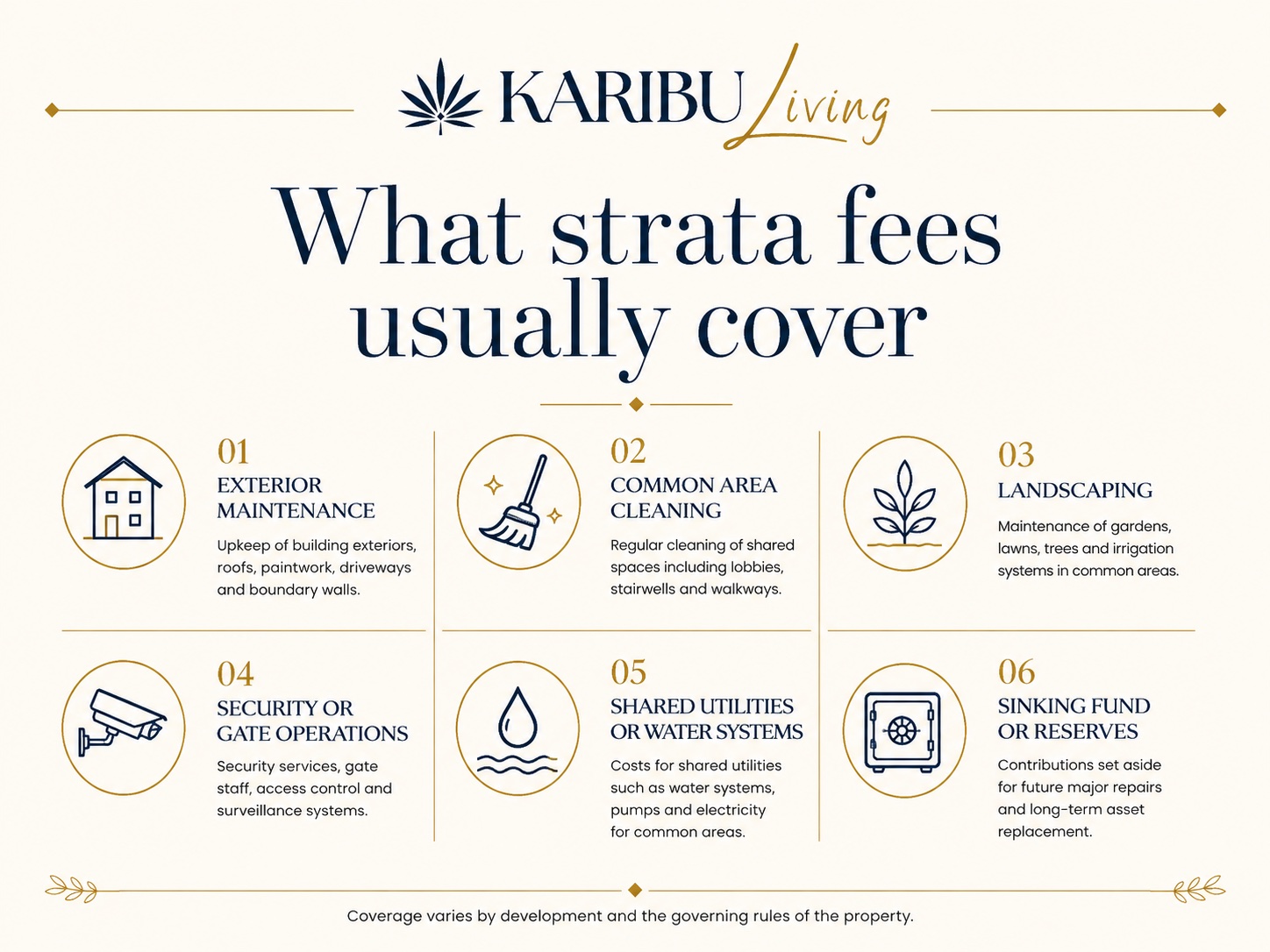
Owners sometimes view maintenance contributions as a fee paid only when they personally use an amenity. That is not how a shared property works. Contributions fund the operation, insurance, repair and administration of assets that collectively protect every owner’s property.
Security and access control
Cleaning and waste management
Landscaping and pool maintenance
Common electricity and water
Insurance for common property
Property management and accounting
Routine repairs and preventive maintenance
Compliance, meetings and record keeping
Contingency and reserve planning
For a registered strata, the legal apportionment of contributions is tied to unit entitlement and the approved budget. Buyers should ask how the proposed contribution was calculated, what it covers and whether it is sufficient for the actual facilities being provided.
Ask About Reserves, Major Repairs and Special Assessments
Routine fees keep the property operating. They may not be enough to replace expensive equipment or complete major works. Roofs, pumps, lifts, gates, pool systems, external finishes and water infrastructure have life cycles. A prudent community plans for them before they fail.
Ask whether the budget includes a reserve or contingency provision, whether a maintenance plan exists and how the corporation would fund a major repair. Where there is no provision, owners may face a special assessment — an additional contribution imposed to meet an urgent or capital cost.
Read the Bylaws Before Signing
The bylaws are not a document to discover after completion. They define the rights and obligations of the corporation, proprietors, tenants and occupiers. They may regulate parking, pets, noise, alterations, short-term rentals, use of amenities and conduct on common property.
A buyer planning to rent the property, operate a home business or modify the unit should confirm that the intended use is permitted. The rules that protect one owner’s quiet enjoyment may also limit another owner’s flexibility.

Management Quality Affects Property Value
Good management is visible in clean common areas, functioning equipment and responsive communication. Its more important work is often less visible: collecting contributions, maintaining records, procuring services, preparing reports, supporting meetings, monitoring contracts and escalating defects.
Through Paul Bel Kay’s Strata and Community Management Division, delivered in partnership with HoShing Realty & Associates, we have seen communities seek help only after services deteriorate, fees go unpaid and residents lose confidence.
Buyers ask about finishes long before they ask about the budget. The ones who ask for the proposed bylaws and the first-year budget while they are still deciding are the ones who know what they are committing to.
Tanya HoShing — Managing Director, HoShing Realty & Associates,
and Sales & Compliance Director, Karibu Condominiums

Ask who will manage it, and how
The lesson for buyers is simple: ask who will manage the property, what authority they have and what systems will be operating from the first day of occupancy.
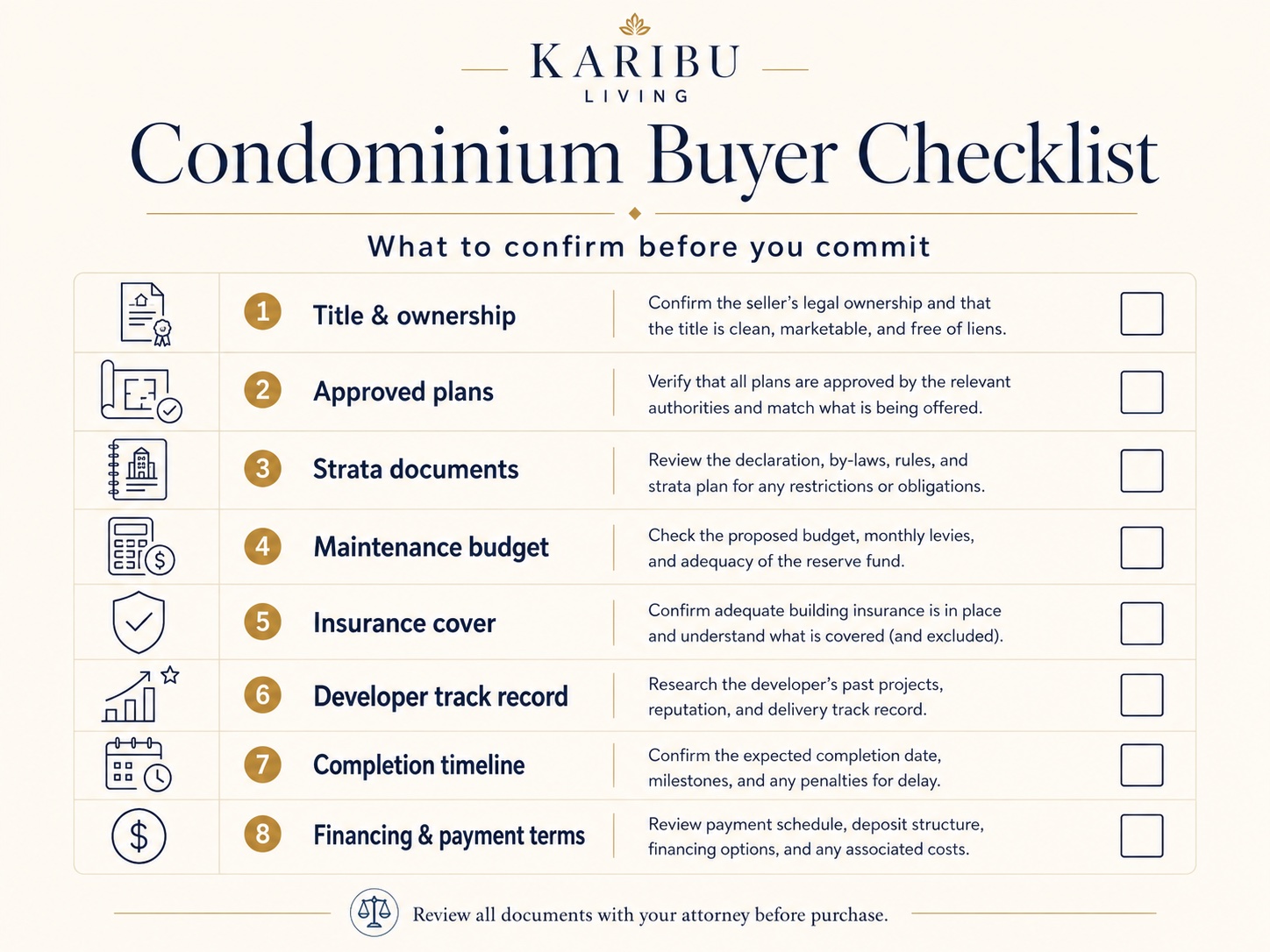
Ten Questions to Ask Before Buying
Is the development and developer registered with the Real Estate Board?
Has the strata plan been registered, or what is the expected registration timetable?
What are the proposed bylaws, including rental and pet rules?
What does the maintenance fee include, and what is excluded?
How was the first-year budget prepared?
Is there a reserve or capital-maintenance provision?
Who will manage the property and what is their scope?
How will defects, warranties and contractor issues be handled?
Are there outstanding compliance matters or annual returns?
What documents will owners receive at handover?
How Karibu Has Been Planned
Karibu Condominiums is being planned with professional management, defined community standards and a minimum three-month rental policy intended to support residential stability. Its shared amenities and resilience systems are being considered not only as design features, but as assets that must be budgeted, maintained and governed over time.
For buyers, the important question is not whether a development promises management. It is whether the operating structure, budget, rules and responsibilities have been considered before the first resident arrives.